

Global volatility, net-zero targets and rising capital costs are prompting a major rethink in how Australia’s mining sector allocates investment.
Deloitte’s Tracking the Trends 2025 report highlights how portfolio realignment, active capital management and ESG-linked investment are reshaping the business investment landscape across the country’s critical industries.
From major miners to private equity firms, businesses are reassessing their assets and growth trajectories in light of the energy transition and evolving global demand for critical minerals.
“There’s a lot of activity in support of portfolio realignment today and there’s a lot of capital being recycled,” said Deloitte Australia Mining & Metals Partner Nicki Ivory.
“Tomorrow’s leaders may be determined by today’s investment choices, and companies should prepare for that by building resilience and agility.”
Capital recycling accelerates

A prominent example highlighted in the report was BHP Mitsubishi Alliance’s US$4.3 billion sale of two Queensland metallurgical coal mines in 2024. While it was an operationally complex transaction, it enabled BHP to sharpen its strategic focus on copper and iron ore.
This movement is not isolated. Deloitte reports that private capital – particularly from investors in Indonesia, China and Russia – is stepping into divestment gaps, acquiring coal and non-core assets with long-term upside.
Private equity deals activity in mining surged by 463% year-on-year in mid-2024, driven by flexible deal structures and faster access to capital.
“Private capital can often do things that corporate entities cannot,” said Deloitte UK Strategy, Risk & Transactions Partner David Harrison.
He said private investors had flexibility to offer different capital structures such as JVs, partnerships and callback options.
“These can offer the seller a broader range of options to achieve their goals,” Harrison said.
ESG and energy transition shape investment flows
The shift to a low-carbon economy is accelerating investment in battery minerals and clean energy inputs.
For example, Anglo American’s decision to divest its coal portfolio in favour of copper and iron ore was driven by a strategy to deliver products for the energy transition.
Deloitte’s report indicated that the move reflects a broader trend of aligning capital with commodities that support electrification, renewable energy and sustainable infrastructure.
Meanwhile, new investment is increasingly shaped by ESG metrics. Sellers with a strong ESG narrative are reportedly up to six times more likely to receive higher-than-expected deal values, according to Deloitte Asia Pacific data.
Companies are integrating ESG into their investment strategy – not just to meet compliance, but to attract like-minded partners and unlock long-term value.
“The way in which ESG can affect deal value and the implications of evolving tax regimes are important factors to be weighed,” the report noted.
“To thrive in an increasingly dynamic future can require companies to take a more active and agile stance on portfolio management.”
Australia well-positioned for exploration capital
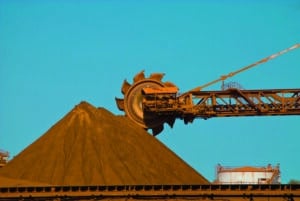
However, the cost and complexity of discoveries are rising, prompting companies to lean more heavily on data-driven targeting, precompetitive geoscience data and AI-enhanced exploration techniques.
As demand intensifies for critical minerals like cobalt, lithium and rare earths, Australia’s stable regulatory environment and rich resource base position it as a key investment destination.
Deloitte expects the country to remain central to global supply strategies for decades to come, provided investment is matched by agility and forward-looking governance.
Active portfolios the new norm
Australian mining companies have moved from having static, long-term portfolios to adopting active portfolio management strategies.
Deloitte Asia Pacific data found that 59% of regional executives review assets at least twice a year – up from 46% in 2022.
These frequent reviews help ensure alignment with changing market conditions, investor expectations and policy signals, enabling companies to stay competitive in a fast-evolving environment.
“Dynamic marketplaces and trade lanes, energy rebalancing and the rising cost of capital are profoundly altering economies and industries,” the report stated.
“The ability to survive and thrive in these conditions will be determined by how well companies develop their resilience and reinvent themselves.”


