

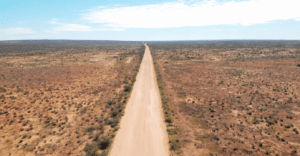
One of the world’s largest renewable-powered artificial intelligence infrastructure projects has been earmarked for Western Australia’s Kimberley region.
Images: Gingerah Energy
One of the world’s largest renewable-powered artificial intelligence infrastructure projects has been earmarked for Western Australia’s Kimberley region.
The proposed Project Meridien near Broome is expected to meet the rapidly growing demand for sustainably powered data centres, aiming to supply gigawatt-scale compute power to Asia-Pacific markets.
“The market for AI training and inference facilities has expanded dramatically in the past nine months,” Gingerah Energy Chief Executive Officer Jop van Hattum said.
“These hyperscale facilities require huge amounts of power, and increasingly investors want that power to be secure, emissions-free and scalable.
“We identified that Australia is ideally suited for this type of development, giving our sovereignty and data security laws, stable regulatory regime and our proximity to the Asia Pacific region.
“Western Australia, in particular, is in the same time zone as roughly half the world’s population, with abundant land and exceptional renewable energy resources.”
Renewable power meets AI demand
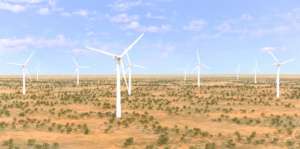
Project Meridien combines solar, wind, batteries and limited gas generation to power an AI training data centre up to one gigawatt capacity.
At that scale, the project would be around 100 times larger than typical metropolitan data centres currently operating in Australia.
Early engineering suggests the site could reach around 90% renewable energy at a significantly lower cost than many regional data centre hubs.
“Our modelling indicates we can supply power at almost half the cost of Singapore,” van Hattum said.
Indigenous partnership at the centre
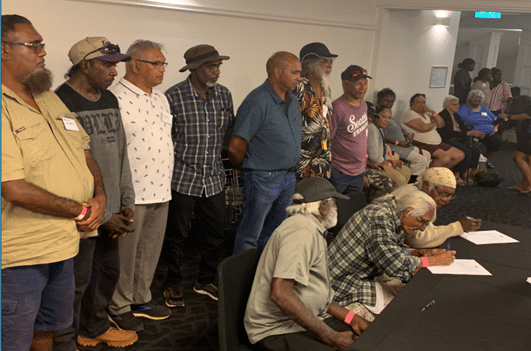
A key feature of the project is its partnership with traditional owners.
Gingerah Energy is a joint venture between Longreach Capital Investment, Fugro Australia and the Karajarri Traditional Owners, following more than a decade of engagement and a 2024 Indigenous Land Use Agreement.
The collaboration has shaped the project’s design and long-term development strategy.
“We are Indigenous-led and committed to sustainable development that respects Country and enables meaningful participation by traditional owners,” van Hattum said.
“It’s important to us that any partners we bring in share those values.”
Multi-billion-dollar investment opportunity
The development will be built in stages, beginning with a phase one project of about 240 megawatts IT processing capacity powered with 1.4 gigawatts of renewables.
Depending on AI compute demand, the project could be multi-phased and exceed $10 billion in investment.
Construction equipment, renewable generation, cooling systems and supporting infrastructure would form part of the initial capital investment.
“Projects of this scale require significant redundancy and reliability in power and infrastructure,” van Hattum said.
“And that means major opportunities for suppliers, contractors, investors and the community as the project progresses.”
Next steps and investor engagement
Initial feasibility studies have been completed and front-end engineering and design is expected to start soon.
Gingerah Energy is seeking strategic partners to help shape the project alongside future hyperscale customers.
The company is preparing for a capital raise and investor roadshow, with phase one investment decision expected by 2029.
First-stage commercial operations are targeted for 2032, with full-scale development potentially reaching capacity by mid-2030.
Van Hattum said WA had a rare opportunity to become a major player in the global AI infrastructure economy.
“Demand for AI compute is accelerating globally,” he said.
“We believe this project positions Western Australia to supply that demand using world-class renewable resources while creating jobs and economic opportunity in the Kimberley.»


